
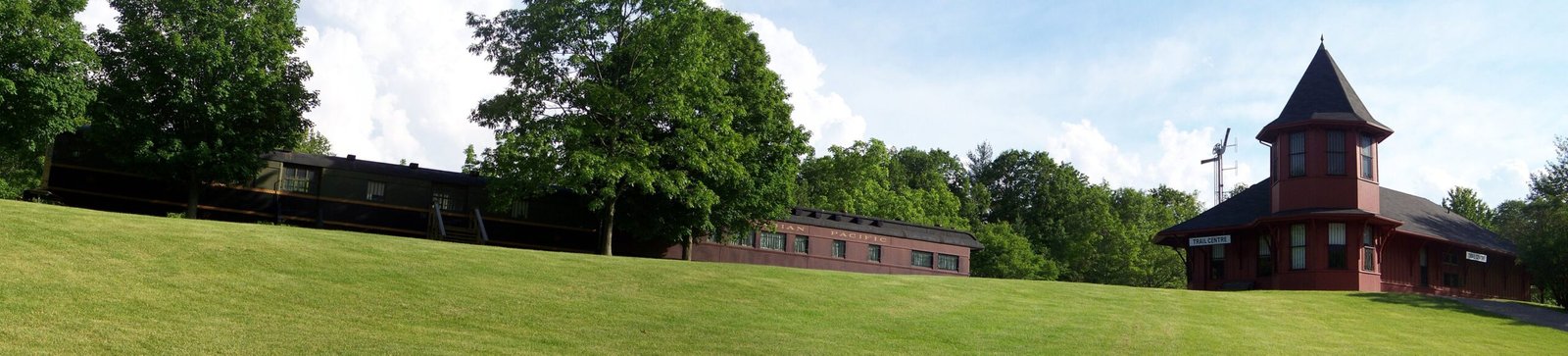
Covering extensive protected Carolinian woodland just west of Hamilton, Dundas Valley offers one of the most expansive trail networks in the region. Its rolling glacial topography features deep hardwood canopies, quiet stream crossings, and wide, well-graded loops that connect directly to the Bruce Trail and the historic Dundas Valley Trail Centre.
From its replica Victorian railway Trail Centre to the preserved 19th-century Hermitage Ruins, Dundas Valley pairs deep ecological diversity with rich regional history. This visitor guide breaks down core loop trails, historical landmarks, parking rules, and day-use planning logistics.
1. Quick Facts & Logistics
- Main Trailhead Location: 650 Governors Road, Dundas, ON
- Managing Body: Hamilton Conservation Authority (HCA)
- Operating Hours: Open daily from sunrise to sunset year-round. The Trail Centre is open daily from 9:00 AM to 3:00 PM (weather permitting).
- Admission & Parking: Paid automated gate entry (approx. $11.00 to $11.50 per vehicle for day-use parking). HCA Membership pass holders enter free.
- Trail Network: ~40 km of interconnected paths, including the Main Loop, Bruce Trail sections, and the multi-use Hamilton-to-Brantford Rail Trail.
- Facilities: The Trail Centre (interpretive displays, washrooms, maps, drinking water), picnic pavilions, and accessible parking bays.
- Dog Policy: Dogs are permitted on trails but must be kept on a strict leash at all times.
2. Top Hiking Routes & Highlights
The Main Loop Trail (Moderate | ~3.4 km loop)
The core trail starting directly behind the Trail Centre is the most popular way to experience the heart of the valley:
- The Route: Follows rolling gravel pathways through mature oak, maple, and hemlock canopies.
- Bruce Trail Overlap: Blazed with standard white Bruce Trail markers, offering gentle rolling elevation suitable for casual hikers and families.
- The Hermitage Access: Provides direct spur connections to the Hermitage parking lot and historic gatehouse.
The Hermitage Ruins & Gatehouse
Situated just off Sulphur Springs Road along the trail:
- Historic Mansion Ruins: Built in 1855 as a lavish stone estate by George Gordon Browne Leith, the mansion was destroyed by fire in 1934. Today, the stabilized limestone stonework and chimneys stand protected in a peaceful wooded clearing.
- The Gatehouse Museum: The surviving historic stone gatehouse offers seasonal heritage exhibits and trail maps.
Headwaters Trail (Challenging | ~10.5 km loop)
For long-distance hikers looking for distance and elevation:
- Begins approximately 1 km from the Trail Centre off the Main Loop.
- Winds through remote interior meadows, crossing cold-water tributaries of Spencer Creek, rolling valleys, and mature forest habitats.
3. The Trail Centre & Rail Trail Multi-Use Hub
Unlike conventional conservation trailheads, Dundas Valley features a fully realized community hub:
- Victorian Railway Station Replica: Serves as the park’s central interpretive centre, complete with an adjacent historic 1929 executive coach car and 1931 CPR baggage car sitting along preserved railway tracks.
- Hamilton to Brantford Rail Trail: Crossing directly through the valley, this crushed-stone, graded route is ideal for gravel cycling, long-distance walking, and cross-country skiing in winter. Cycling is welcomed on the Rail Trail and designated valley trails, but is prohibited on Bruce Trail footpaths.
4. Visitor Tips & Connecting Escarpment Trails
- Footwear Recommendation: The Main Loop and Rail Trail feature crushed gravel suitable for regular walking shoes. If taking the Headwaters or interior Bruce Trail ridges, wear hiking shoes with sturdy lugs to manage roots and muddy descents.
- Tick Awareness: Because Dundas Valley sits in the warmer Carolinian microclimate zone, blacklegged ticks are active from spring through autumn. Stick to marked trails and perform a tick check after hiking.
- Connecting Regional Trails: Expand your exploration of the Niagara Escarpment by pairing your hike with our complete guides to the waterfall gorge at Hilton Falls Conservation Area, the cliff lookouts at Mount Nemo Conservation Area, or the boardwalk loops at Crawford Lake Conservation Area.